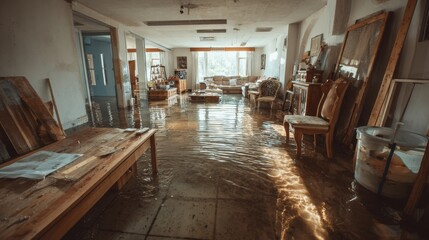
Preventing water damage is important to protect your home and your possessions. Taking preventative steps can help minimize the risk of roof leaks and flooding.
Proper grading and drainage are essential to keeping water away from homes. This includes sump pumps for basements and crawl spaces. It also includes ensuring that gutters and downspouts are clear. Contact All Pro Restoration for more information.
Make Sure Your Gutters Are Clean
Gutters are designed to channel rainwater away from roofs, foundations, and concrete surfaces (think driveways and sidewalks), preventing long-term problems like basement flooding and soil erosion. However, gutters and downspouts can become clogged with leaves, twigs, and silt without regular cleaning. When this happens, water overflows and runs against exterior walls or down the foundation, softening the surrounding soil and increasing the risk of damage over time.
Keeping your gutters clean and free-flowing is the first step in protecting your home from water intrusion. Ideally, you should clean your gutters twice a year – in the fall and spring – to prevent buildup and clogs. If you have tall or difficult-to-reach gutters, consider hiring a professional to help ensure you’re using the right tools and are safely working from a ladder.
Before starting the cleaning process, it’s important to have all your supplies ready. This includes a sturdy ladder, gloves, a gutter scoop or trowel, a bucket or trash bag, and a garden hose. It’s also a good idea to set up the ladder on a stable surface, maintaining three points of contact – two hands and one foot, or two feet and one hand – throughout the cleaning process.
Start the cleaning process by removing any large debris from the top of your gutters and downspouts. Once the larger debris is removed, you can begin to clear twigs and leaves that have accumulated in your downspouts. Once you’re finished, flush the gutters with a garden hose to check for proper drainage.
When cleaning your gutters, it’s also important to inspect them for signs of sagging, damage, or leaks. If you notice any of these issues, be sure to repair them as soon as possible to avoid more costly repairs in the future.
If you’re unable or unwilling to climb a ladder to clean your gutters, consider installing gutter guards. These covers keep most debris out of the gutters, and they’re easy to install over existing gutters. They’re also a cost-effective solution for homeowners who don’t want to or can’t perform routine maintenance on their own.
Check Your Downspouts
Downspout drains, or downspouts, are a critical part of any home’s drainage system. Typically attached to gutters, downspouts channel rainwater and melted snow away from the foundation of your house. By preventing water accumulation, these unsung home maintenance heroes protect your roof and foundation from costly structural damage.
Downspout clogs are common, but they’re preventable with regular cleaning, inspection, and proper care. Downspouts can become clogged with leaves, twigs, and other organic debris that collects in the gutters. When the clog becomes too severe, it can block downspouts and cause water to back up into the gutter system or even enter the house.
The best way to prevent downspout clogs is by establishing a consistent gutter and downspout cleaning routine. During this process, be sure to remove all debris, especially before and after heavy leaf fall in the fall season. You can also use a plumber’s auger or downspout snake to break up and dislodge tougher clogs. Once the clog has been removed, flush out the downspout with a garden hose to ensure that water flows freely.
In addition to organic debris, small animals such as birds and rodents can build nests in downspout sections, blocking the flow of water. Additionally, tennis balls or children’s toys can travel down the gutters and into downspouts, where they can become wedged in narrow sections. If you notice any signs of downspout obstruction or drainage issues, such as rust spots on the downspout or pooling water near your home’s foundation, contact a professional gutter service.
A qualified gutter technician can help you establish a routine for downspout maintenance, ensuring that your home’s drainage system is fully functional. They can inspect downspouts and drainpipes to determine the source of problems and make repairs to ensure that they’re ready for heavy rainfall or storms. They can also recommend downspout extensions or splash blocks to help you direct water away from your house’s foundation and crawl space. In addition, professionals can check that downspouts are angled correctly and that the slope is adequate to prevent flooding or basement leakage.
Clear Debris Around Your Foundation
During heavy rains, debris can wash against a house’s foundation and cause water to seep into the home. If you live in an area prone to flooding, clearing debris from your property can help keep your house safe from damage and prevent costly repairs.
Over time, the grading around your house can shift, making it difficult for water to drain away from the foundation. This can be due to seasonal rain washing away soil, erosion, or a lack of ground maintenance to reduce runoff. If the grading around your house has changed, it’s important to hire a professional for re-grading services to resolve the issue and avoid water intrusion into your home.
Proper landscaping can also play a role in preventing stormwater damage. If you live in an area prone towards flooding, it’s important to plant vegetation that requires very little water. Any flowers or shrubs planted next to your foundation should be moved away from the foundation, as they can lead to moisture problems and structural issues.
If you have a problem with water pooling up around your house’s foundation, installing downspout extensions can help. These are easy to install and can direct water flow away from your foundation and into the yard. They can be purchased from most hardware stores, and you can find tutorials online to guide you through the process.
You can also regrade the dirt around your foundation by building up the soil and creating a slope. This will help ensure that water drains away from the foundation, and can be done by following this guide from This Old House.
Water damage can be devastating to homeowners, and the best way to avoid it is through regular inspections of your house. You should also be vigilant to the signs of damage, such as unexplained increases in your utility bills, musty smells, or damp spots on walls and ceilings. If you do notice any damage to your home, be sure to report it to your city or town as soon as possible and take precautions to protect yourself and your belongings until it has been fixed.
Schedule a Foundation Inspection
The soil surrounding your foundation can become overly saturated after a heavy rain, creating pressure against the structure that could eventually cause cracking, sinking and other damage. Controlling the flow of water on your lot is one of the most important ways to protect your foundation.
Gutter and downspout extensions, yard grading, and landscaping that channels water away from your home can all help. But sometimes you’ll need a professional to get an accurate diagnosis and a precise plan of action for repairs. That’s where a foundation inspection comes in.
Foundation inspections are a good way to assess your current state of drainage, and you should always seek out the services of a certified and licensed professional who is familiar with the needs of your home’s foundation. That will ensure you receive an honest opinion, and that the repairs your home requires are appropriate for its condition and soil type.
A qualified home inspector can point out potential issues you may want to address, or you can work with a foundation repair contractor who will take measurements and determine whether your foundation is in need of repairs and what the costs will be. The latter will also be able to advise you on preventative measures that you can take now to avoid costly foundation repair in the future, like installing a French drain and ensuring your gutters are clear and directing water safely away from your foundation.
Moisture isn’t just a problem for your foundation, it can affect wooden framing and floor joists, and rot or mold growth can form along walls, baseboards, and in the crawl space. These problems will often be difficult or impossible to see without a thorough inspection, but you can keep an eye out for a musty smell and visible mold and mildew growth as early warning signs.
Proper drainage keeps the soil around your foundation stable, and helps prevent erosion that can wash away or soften the supporting soil, leading to foundation settling or sinking over time. It also keeps moisture from seeping into wooden framing, floor joists, or support beams and causing wood rot that compromises the integrity of your home’s overall structure.